If you’ve been outside in Wildwood this week, you’ve probably noticed the lawn starting to look a little yellow. Dandelions are up, and if you look closely at the grass around them, there’s something else happening too — a low carpet of tiny blue-purple flowers covering just about every unmowed patch of ground in the area. From a distance it might look like nothing. For a colony coming out of winter, it’s a lot.
What’s Blooming Right Now
The yellow flowers are dandelions, which most people already know. The blue ones are speedwell — common speedwell (Veronica persica) — a low-growing plant that blooms earlier than almost anything else in the area and shows up in lawns, edges, and disturbed ground across west St. Louis County every spring.
Neither one gets much respect in the conventional lawn-care world. Both are considered weeds. But for a colony coming out of winter with depleted stores and a queen ramping up egg production, these two plants are producing pollen and nectar when almost nothing else is.
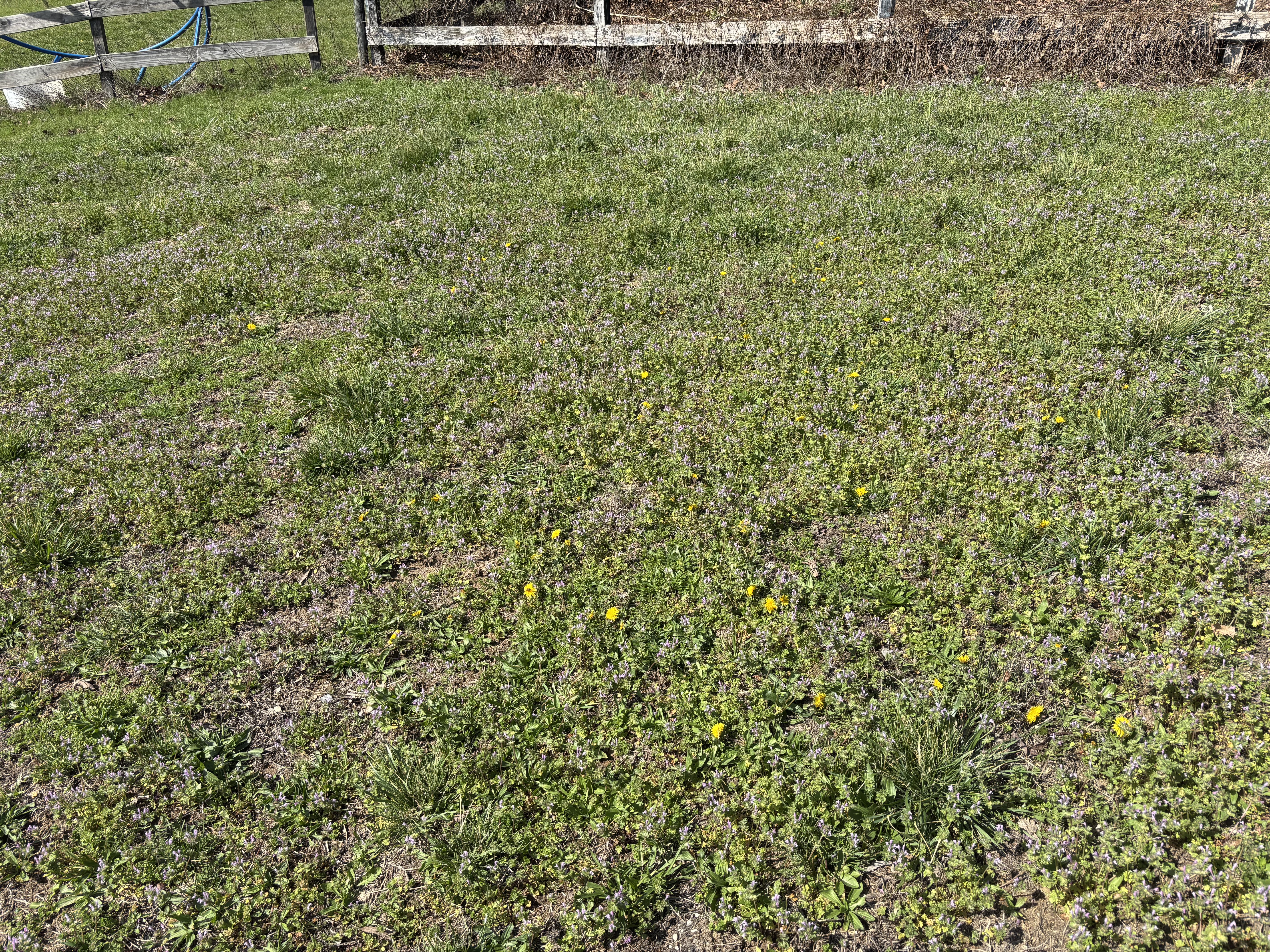 A lawn near our hives this week — dandelions and speedwell blooming together in the same patch of grass.
Why This Moment Matters
By late March, our colonies have been building for weeks. The queen has been laying in an expanding pattern since the winter solstice, and the population of new spring bees is growing fast. All those developing larvae need protein, and protein for bees means pollen — a lot of it.
Dandelions are great for this. A single dandelion head is made up of dozens of small individual flowers, each producing both pollen and nectar. The pollen is bright yellow and nutritious, and the nectar — while not produced in huge volumes per flower — adds up quickly when there are thousands of blooms open on a warm afternoon. We watched bees working the dandelions in our yard on a recent sunny day, and on some of the heavier foragers, the pollen loads were visibly packed onto their legs before they even made it back to the entrance.
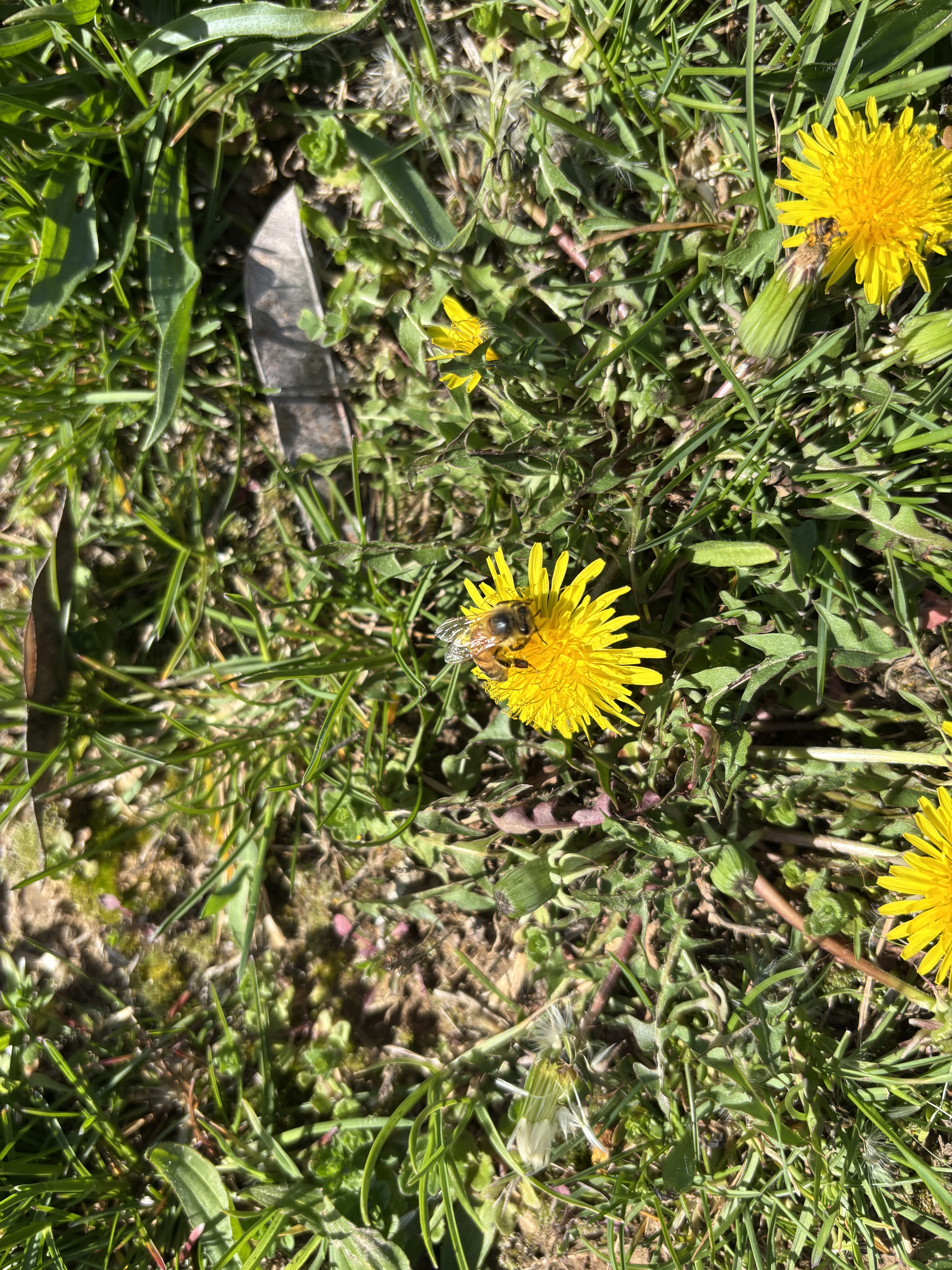 One of ours on a dandelion this week. You can see the pollen load starting to build on her leg.
Speedwell does something slightly different. The flowers are tiny — barely a few millimeters across — but they’re open early and in huge numbers. For bees, the value is in the sheer density of blooms. They’re not making long trips; they’re working the ground right around the hives. That kind of nearby forage matters when temperatures are still up and down and a forager can’t afford to burn much energy getting there.
Dandelions Are Everywhere on Purpose
One thing that strikes us every spring is just how well-distributed dandelions are across the landscape. They bloom in yards, in road margins, around fence posts, next to fire hydrants, in any patch of ground that gets some sun and doesn’t get mowed too early. They’re not picky about where they grow, and they’re not subtle about when they bloom.
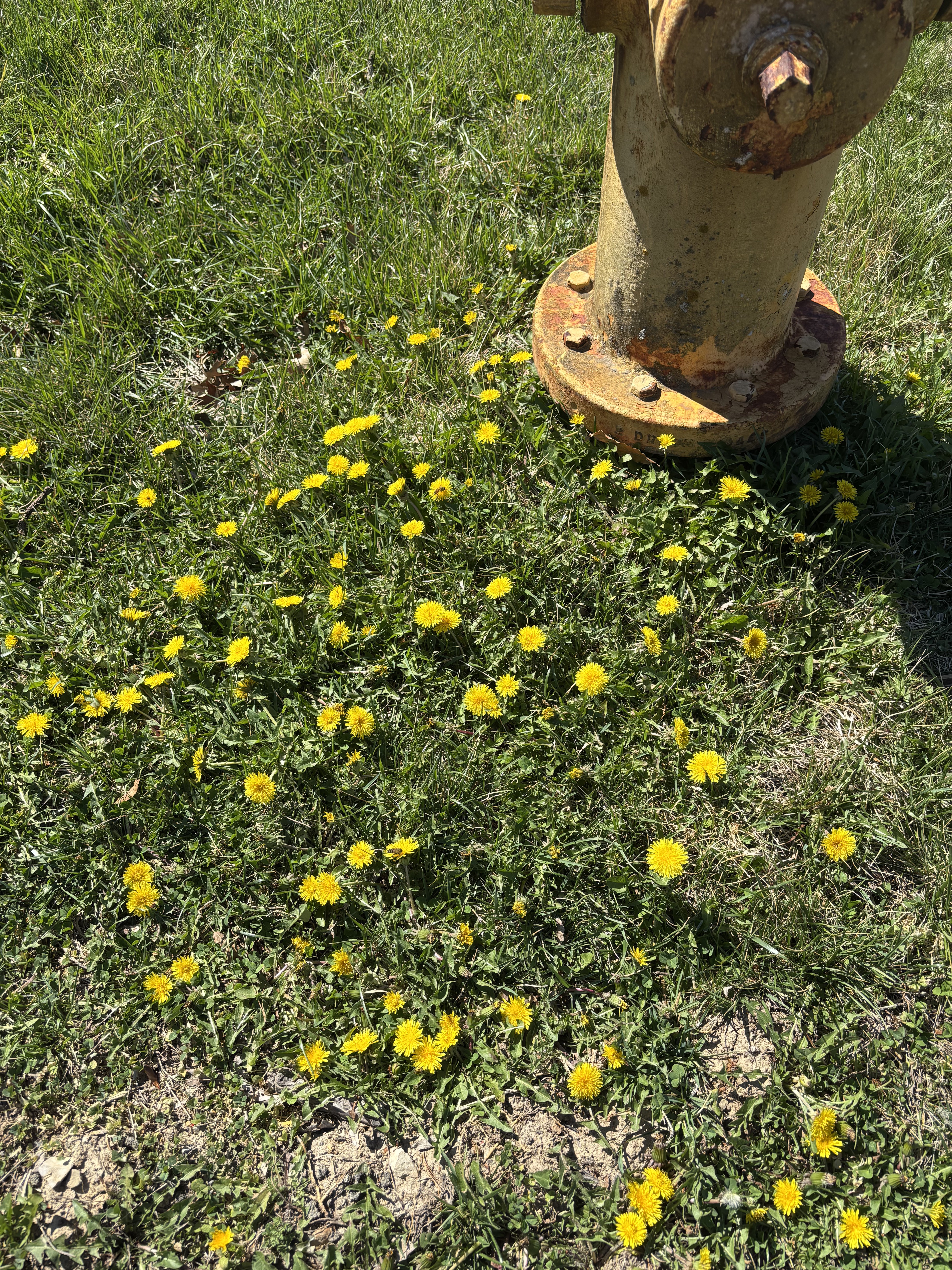 Dandelions don’t need ideal conditions. They’ll bloom wherever they can.
That persistence is part of what makes them so valuable to pollinators. They don’t require anyone to plant them or tend them, and they don’t wait for conditions to be perfect.
What You Can Do
If you have dandelions in your yard right now, the best thing you can do for our bees — and for every other early pollinator in the area — is leave them alone a little longer. Hold off on the herbicide. Wait on the mowing. Even a few extra days of blooms on a warm week in late March makes a real difference for colonies that are still building their spring population.
The same goes for the speedwell in the lawn. It’s easy to overlook because the flowers are small and it stays low to the ground. But it’s out there, and the bees are finding it.
The bees have been telling us spring is here for about two weeks now.
Comments
Loading comments...
Leave a Comment