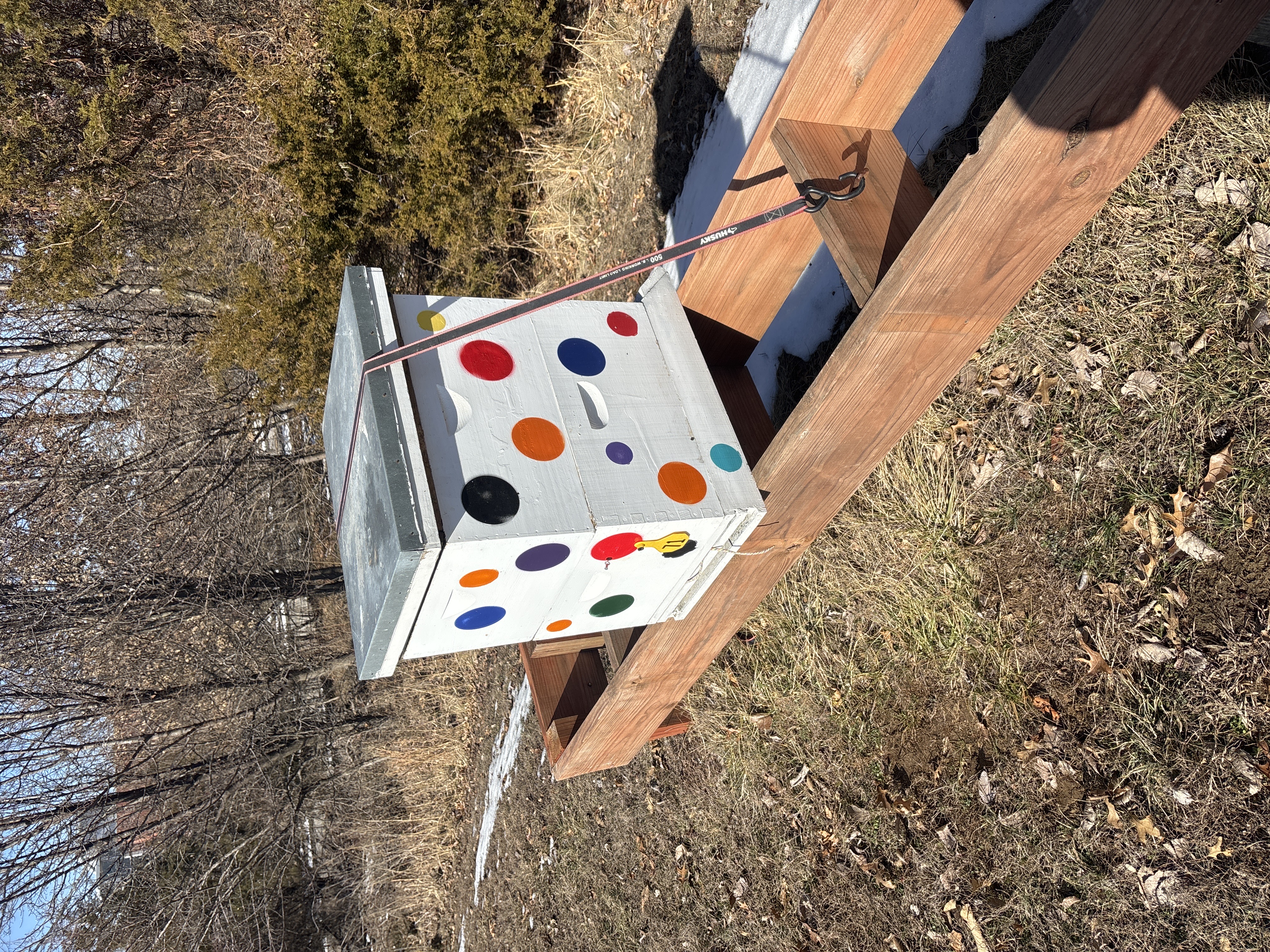
It’s late February here in Wildwood, Missouri, and with some mild days mixed in lately, our bees are already hard at work. Behind those quiet polka-dotted hive boxes, there’s a whole lot going on that you’d never guess just by looking. Let’s take a peek inside to talk about what this time of year means for our colonies.
The Big Shift: Winter Bees Handing Off to Spring Bees
The bees alive in the hives right now are not the same bees that will be buzzing around your garden this summer. The bees that carried the colony through winter are a special generation often called “winter bees.” They’re physiologically different from the bees born during warmer months. While a summer bee might live only four to six weeks, winter bees can live five months or longer. Their bodies store extra protein and fat reserves (thanks to a molecule called vitellogenin) that allow them to survive the cold months, keep the cluster warm, and — most importantly — raise the first round of new brood (baby bees) when the days start getting longer.
That transition is happening right now. The queen has been slowly ramping up her egg-laying since around the winter solstice, and by late February she’s really picking up the pace. Those eggs become the first “spring bees” — shorter-lived but built for foraging, wax-building, and all the busy work of a growing colony. The winter bees won’t be around much longer. Their final and most important job is to nurse this new generation into existence before they wear out. It’s one of the trickiest times of the beekeeping year.
Baby Bees on the Way
Inside our double-deep hive boxes, the cluster has likely moved up into the upper box over the course of the winter. That’s normal. Bees eat their way upward through their honey stores, and by this point in the season, the brood nest is typically concentrated in that top box.
The queen is laying in an expanding pattern — a small, tight circle of brood that grows a little bigger each week as the cluster can keep more area warm through the cold nights. The size of the cluster matters a lot here. Stronger colonies with more bees can cover and warm more brood, which means they grow faster. Smaller colonies have to devote so many bees to just keeping warm that their growth is much slower.
Honey Stores: The Danger Zone
Late February into March is actually the riskiest time of year for starvation. That might sound backwards, but think about it. The bees have been eating through their honey all winter, and now that brood rearing is accelerating, they’re burning through stores even faster. Nurse bees need a lot of energy to produce the royal jelly and bee bread that feed developing larvae. Studies have shown colonies can consume honey at roughly twice the rate in late winter compared to the dead of winter months.
When we harvest honey in the summer, we always try to make sure to leave plenty in the hive for the bees to get through winter on their own. But late February is when we check to make sure they have enough to make it the rest of the way. On a mild day — anything above about 45 degrees — we can do a quick heft of the hive to feel how heavy it is. If a colony feels light, we’ll give them a sugar board like the one in the photo below to bridge the gap until natural nectar starts flowing again.
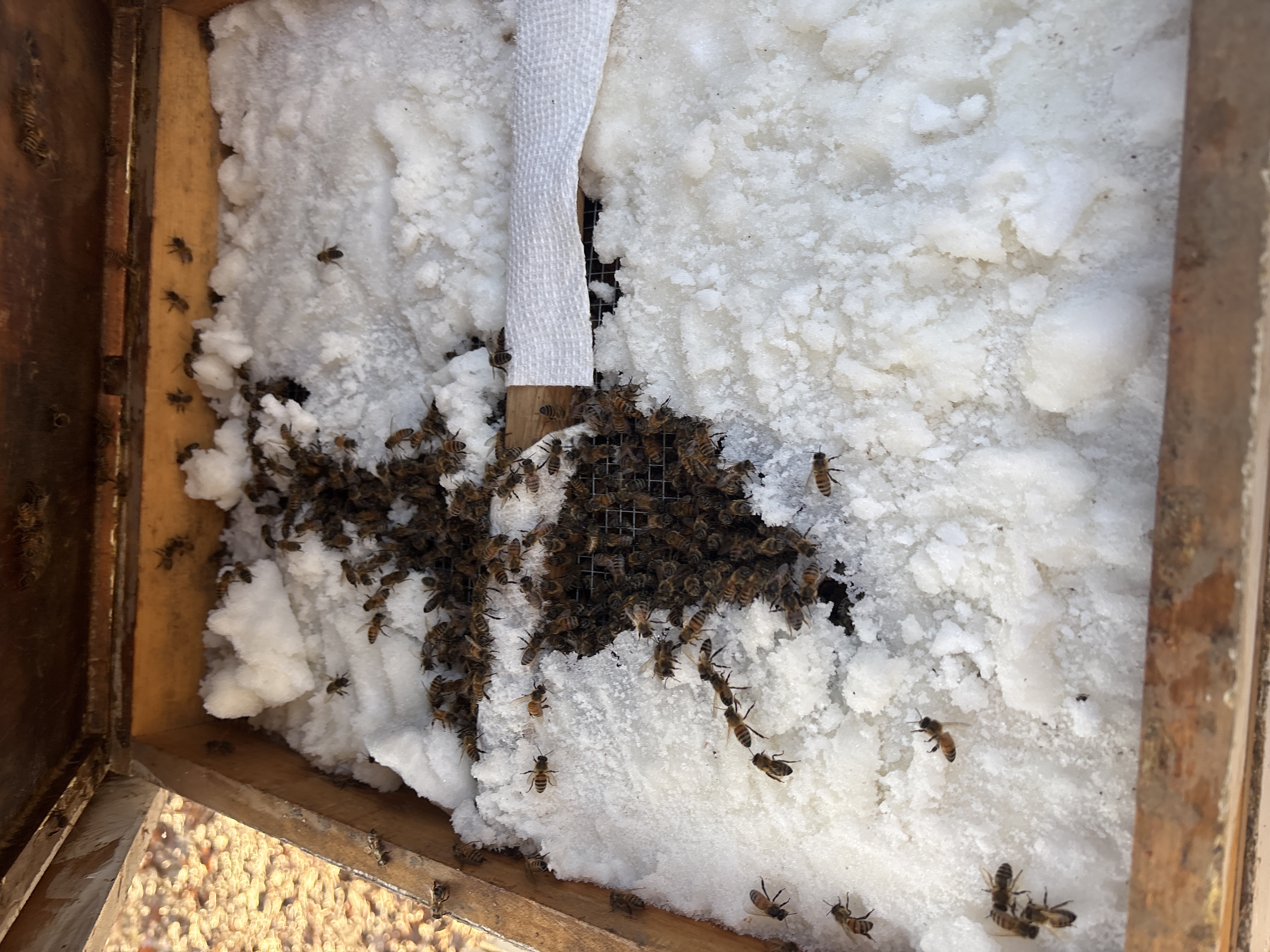 A look inside one of our hives — bees working on a sugar board we placed to help them through the last stretch of winter.
This is just emergency groceries to keep them going. We always remove any sugar well before the bees start collecting the nectar that will become surplus honey — the honey we harvest and you take home.
First Pollen of the Year
Even though it might not feel like spring yet, some of the earliest pollen sources are already starting to show up around Wildwood. On a sunny afternoon when temperatures climb into the upper 40s or 50s, you might spot bees coming back to the hive with tiny loads of pollen on their legs. That fresh pollen is a big deal for the colony.
So what’s blooming right now in our area? A few things are providing those critical first bits of pollen and nectar. Red maples are among the earliest trees to push out blooms, and they’re an important early pollen source. Elm trees are also flowering early and provide pollen before most people even notice anything is blooming. If you have willows nearby — and there are plenty along the creeks and low areas around Wildwood — those fuzzy buds are starting to open and bees love them. Witchhazel is another early bloomer that puts out its spidery yellow flowers right around this time — here’s one we spotted blooming a few weeks ago.
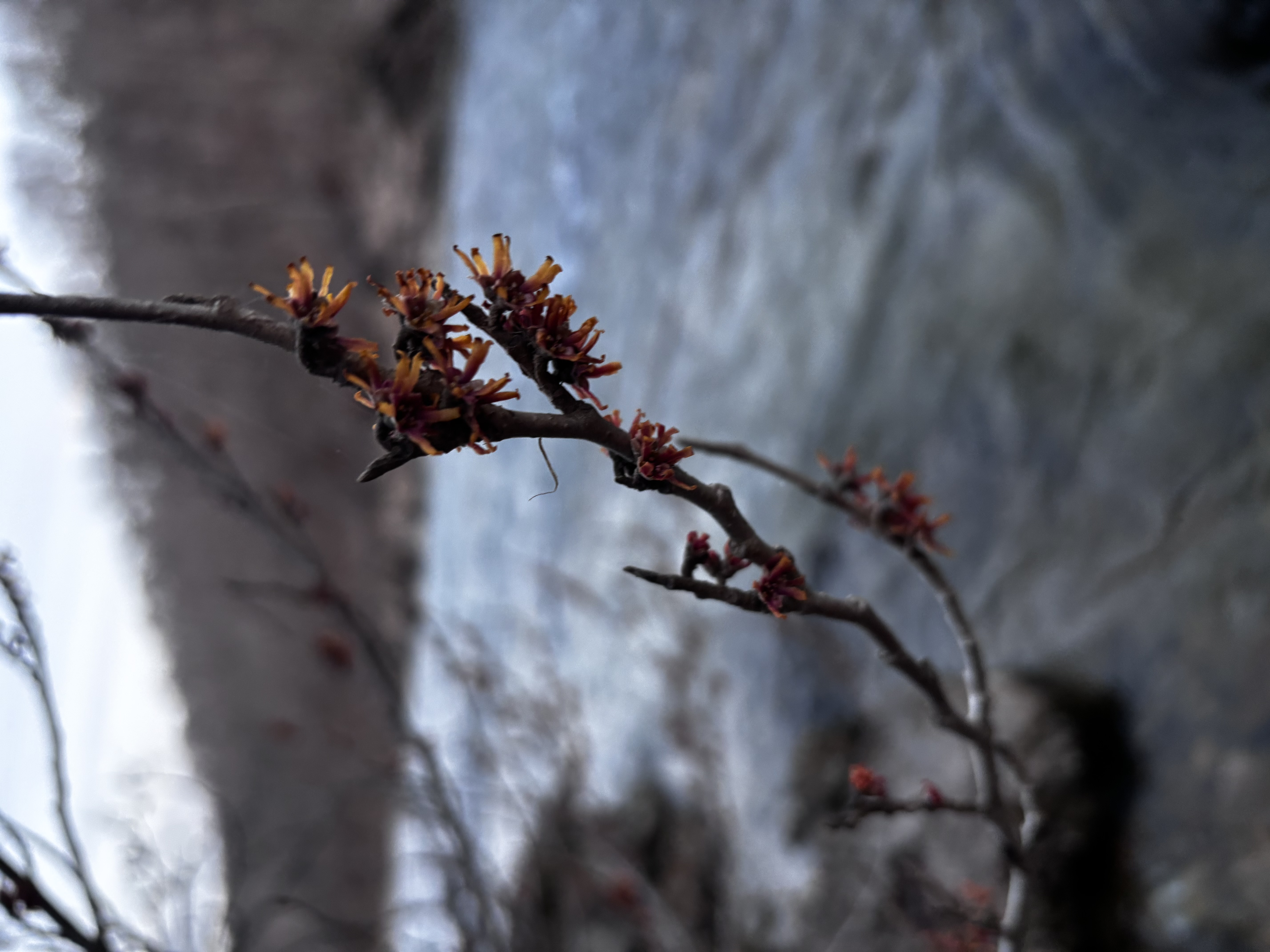 Witchhazel in bloom in Missouri — one of the first flowers of the year and an early source of pollen for the bees.
And if anyone in the neighborhood has early crocuses or daffodils poking up, those cheerful flowers are a welcome sight for foragers on warm afternoons.
None of these are producing huge amounts of nectar, but the pollen they provide is critical. It gives nurse bees the protein they need to feed all that new brood the queen is laying. Every little bit helps the colony turn the corner from winter survival mode into spring growth.
What We’re Doing Right Now
At this point in the season, our job as beekeepers is mostly about paying attention without being too intrusive. We’re monitoring hive weight to make sure nobody runs out of food. On warmer days, we watch the hive entrances for activity — are bees flying? Are they bringing in pollen? Do we see any dead bees being carried out (which is actually a good sign of a healthy, housekeeping colony)? If a hive entrance is completely quiet on a warm afternoon when other hives are active, that’s a red flag worth investigating.
We’re also thinking ahead. Once temperatures consistently reach the mid-50s — usually sometime in March — we’ll do our first real inspections. We’ll check on the queen, see how the brood pattern looks, assess whether colonies need frames rearranged, and decide if it’s time to reverse the hive bodies to give the queen room to expand downward.
Looking Ahead
The next few weeks are all about momentum. The colonies that come through this stretch with healthy queens, adequate stores, and a strong population of new spring bees will really take off once the redbuds, dandelions, and fruit trees start blooming in earnest. That spring buildup is what sets the stage for the honey crop later in the year — the honey that ends up in your jar.
So the next time you drive past the row of beehives along Old State, know that there’s nothing quiet about what’s happening inside. Those bees are in the middle of one of the most important transitions of their year, and spring is closer than you think.
Comments
Loading comments...
Leave a Comment